

Autistic Fairy Tale series - Escaping the Kingdom of Normalia
- Nov 21, 2025
- 6 min read
This article is inspired by a recent article on the systems that harm, written by Helen Edgar from Autistic Realms.
Once upon a time, the world was inhabited by magical creatures who lived in holloways and hiding places, under tree boughs and at the bottom of wells, in the little pockets of villages and towns where you would have to seek them out to find them. You may have heard of some of them in stories - the green man, the jubilant sparrow, the naughty king, the boats of stone that carry the dead. So many to list but there is something more pressing to say which is where the story finds itself becoming a little bit nervous.
As time passed in the world, hundreds and hundreds of years of time passing, slowly but surely a new order began to grow, insidiously like invisible weeds. The changes were fought at first but this didn’t last. Eventually the world became known as the Kingdom of Normalia. The strangest thing is, even though the new order crept through the whole world, nobody really seemed to notice. There didn’t seem to be anything unusual going on – in fact, everything that the Kingdom decreed was called normal, as if normal existed and had always existed. No one would even have thought to question it – it was just somehow accepted. There was even a phrase for the movement towards this new way of living – it was called ‘the norm’.

The decrees of the Kingdom of Normalia were not easy to spot because they hid in plain sight within the language, the culture, society and the politics of Normalia. You could find it in the business of doing life. Let me try and describe what existed but could not be seen as anything but ‘the norm’.
From a young age the little ones were taught how to play, how to sit still, how to listen properly, how to learn, how to speak, how to look, even how to move in the normal way. The magical creatures were cast out as the disruptors of society, they were deemed to be ‘not normal’. The gait of the green man was too loping. The chirping of the jubilant sparrow was too excitable. The naughty king disobeyed the rules in the halls of learning and he was told off so much that his heart turned black as stone. And his eyes learned to distrust everyone around him. And as the children grew into adults so the weeds grew and grew, they grew over the eyes and over the ears of the people until a number of them were immersed in the invisible rules of Normalia. People sat still, they followed the rules of normal dress, normal and expected ways to be.

I do not know if you can notice this, but see if you can notice, as you breathe this story, how the air becomes thin. In the story itself also, the freshness and clarity of the air had narrowed. As the years went by, magical creatures died off in their thousands and the trees of the world shook their leaves with the greatest concern. It was as if everybody was under a spell, they just did not know it.
But all was not lost.
Some of the people felt the constriction of the decrees. All their lives they felt as if they were on the outside looking in. These individuals were called the silent people, not necessarily because they were ‘silent’ as such, but because their discomfort was imperceptible while at the same time being entirely noticeable in the space that sits between people. The ‘normal’ people noticed it. The silent people noticed it, but nobody really named it as such. The silent people felt their discomfort in how they struggled to follow the rules. Their natural way was to rock, to sing, to jump, to fill their lungs with air and breathe. They would often wander into their imagination, as a way of escaping Normalia. Children were given special objects in the learning rooms in order to help them stay still. They were encouraged to play in particular ways, to talk according to the ‘norms’. People were wary of them if they wandered off and spoke to trees or enjoyed time alone. As they grew into young people, many of them were given bewitched masks and jackets to wear, to help them feel ‘more normal’ according to the decrees.

And so it was for some time this way, until the silent people found ways to give voice to their silence. They wrote about their secret journeys, their difference. They explored in writing and in spoken tales by firelight their reflections about the meaning of their discomfort. In some places it was not safe to do so, but still they read about others’ discomfort and somehow they felt seen and heard as if for the first time. Some people who read the stories wondered to themselves if there could possibly be another land beyond the Kingdom of Normalia. When they thought about it and really, really thought about it, as if by magic, for some a letter would arrive on their doorstep announcing the reason for their silent discomfort. Others didn’t even receive a letter, they just knew that it was real. And in this knowing they were given a map which led them to a secret door, beyond the valleys of Normalia. And when they walked through that door there really was no going back. For some as they walked through, they sort of disintegrated in shape and form, and then reintegrated and became eagles or hawks. Some became the tattooed fairies, and some became the wise hags, for it was known that in the Kingdom beyond Normalia, hags were the wise women who kept the keys to the truth of living well.

In the Kingdom beyond the Kingdom, on the other side of the wooden door, people learned how to rest in ways that suited their hearts. People threw off the curse of diligence and toil, and instead turned their magical energies towards finding tunnels of enchantment. People learned as if for the first time, how to play and when they played, they somehow awoke images of their younger selves which spoke and sang again with bitter sweetness. And so with this transformation, the ‘silent people’ became the story people. For their stories were important and they needed to be told.

The message that was written into the story is here to be seen, written with their quills of gold. And the words written were:
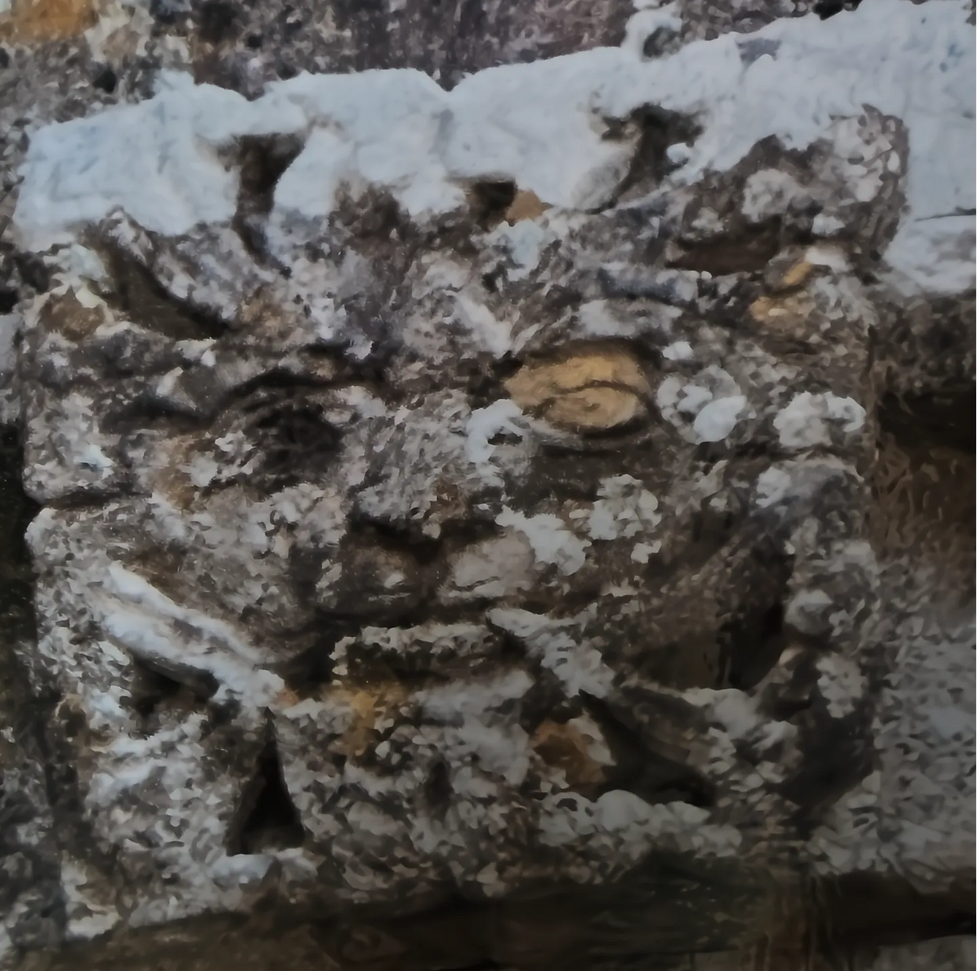
The doorway appears not when you search for it with your mind, but when you stop trying to be ‘normal’ long enough to notice. The curse of the Kingdom of Normalia only breaks when you stop long enough to notice you’re holding your breath. Watch out for when you catch yourself sitting too still, speaking too carefully, or moving in ways that don’t feel like yours. You need time, and you especially need to find the fallow field where you can rest long enough for the masks and jackets to unweave themselves from your burdened shoulders. In the fallow fields, that is when the sparrow’s song becomes a call. That’s when the green man’s face carved in the old stone comes to life and looks at you. That’s when the quiet places reveal the way towards the wooden door. And it will most definitely be unlocked and open for you to walk through.
THE END.
This article pays tribute to all the autistic advocates working hard to shift narratives, bringing their energy to upholding the values of the neurodiversity paradigm:”The Neurodiversity Paradigm is a tool of resistance against epistemic injustice and a way to practice epistemic justice. We are reclaiming our right to understand, describe and name our experiences, our differences, our altered states, our distress, our voices, our plurality and our minds outside of the dominant narrative that says they’re a mental illness or disorder.” (Stimpunks Glossary of neurodivergent terms)
Further reading: Empire of Normality: Neurodiversity and Capitalism (2023)Also, see Autistic Realms for a reading list.


Comments